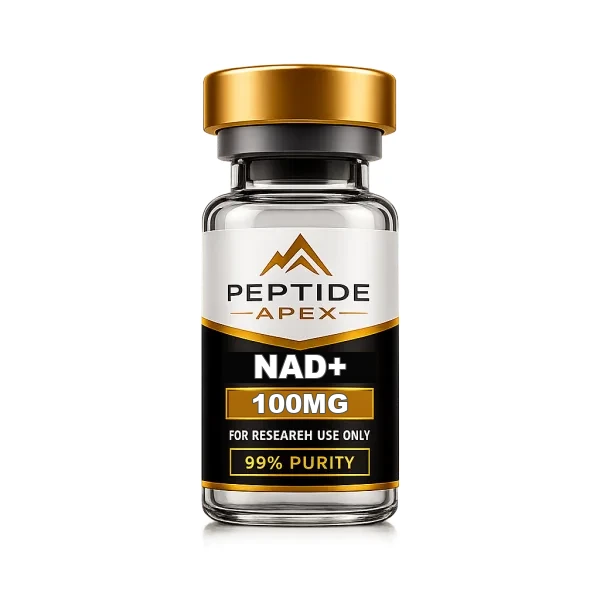
NAD+ is commonly studied in cellular energy, mitochondrial, and longevity research, particularly in models focused on redox balance, metabolic function, and age-associated cellular decline. Researchers often evaluate it because NAD+ is central to energy-transfer and repair-related enzyme pathways.
Its appeal is the way it connects metabolism, mitochondrial function, and cellular repair systems. NAD+ is often relevant when the research design examines energy availability, oxidative stress, or sirtuin-related signaling models.
For researchers building longevity or cellular-energy protocols, NAD+ offers a foundational metabolic angle that can complement MOTS-c, SS-31, AICAR, or 5-Amino-1MQ.
- Studied for cellular energy and redox balance
- Relevant to mitochondrial and longevity models
- Commonly explored in metabolic repair research
- Useful for age-associated cellular function studies