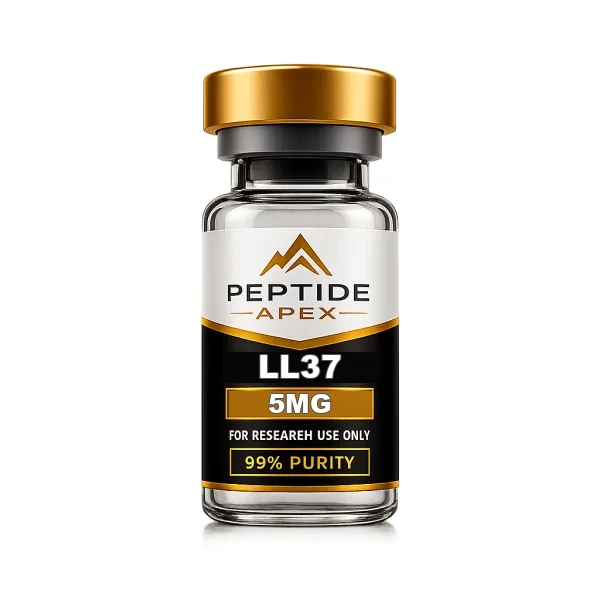
LL37 is commonly studied in immune, antimicrobial, and inflammatory-response research, particularly in models involving innate immunity and barrier defense. Researchers often evaluate it because it is a human cathelicidin peptide associated with host-defense pathways.
Its appeal is the way it fits into research around microbial response, wound models, and immune signaling at tissue barriers. LL37 is often relevant when the study focuses on immune activity, inflammation, and epithelial response.
For researchers building immune or repair protocols, LL37 offers an innate-defense angle that can complement KPV, Thymosin Alpha-1, BPC-157, or VIP.
- Studied for innate immune and antimicrobial signaling
- Relevant to barrier-defense and wound models
- Commonly explored in inflammatory-response research
- Useful for host-defense and tissue-response studies