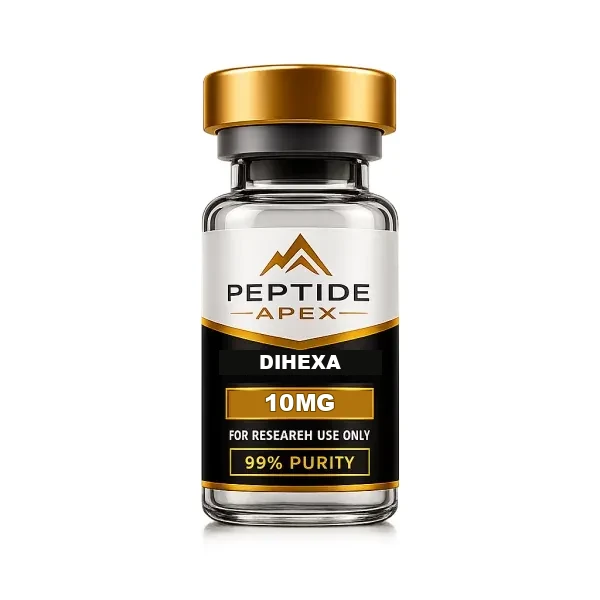
Dihexa is commonly studied in cognitive and neuroregeneration research, especially where the focus is on synaptic growth, learning pathways, and neuroplasticity. Researchers often look at it because it is associated with hepatocyte growth factor signaling models.
Its appeal is the way it fits into long-term brain-support studies rather than short-duration stimulation models. Dihexa is often relevant when the research question involves synapse formation, cognitive resilience, or neuronal connectivity.
For researchers building cognitive or neurorepair protocols, Dihexa provides a distinct neuroplasticity-focused angle that can complement Semax, Selank, Pinealon, or Cerebrolysin.
- Studied for synaptic and neuroplasticity signaling
- Relevant to cognitive performance research models
- Commonly explored in neuronal connectivity studies
- Useful for brain-repair and learning-pathway research