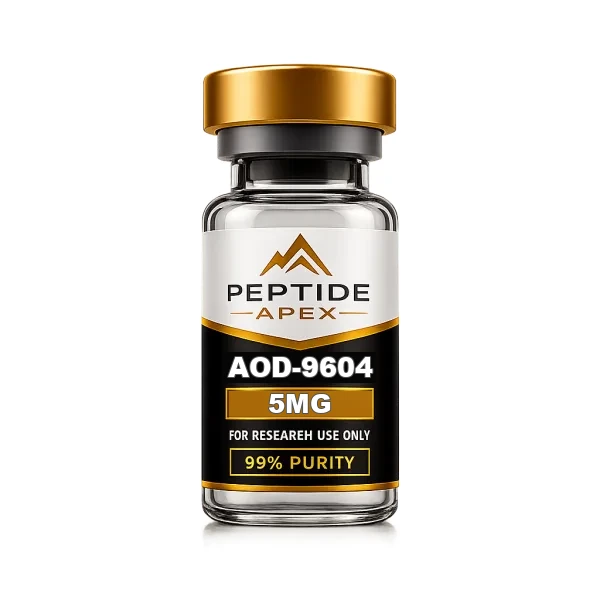
AOD-9604 is commonly studied in metabolic and body-composition research, particularly in models focused on lipid metabolism and growth-hormone fragment signaling. Researchers often evaluate it because it represents a more targeted metabolic fragment rather than a full GH-axis product.
Its appeal is the way it fits into studies of fat metabolism, tissue composition, and metabolic response without being used as a broad GH secretagogue. AOD-9604 is often relevant when the research design focuses on body-composition markers and lipid-handling pathways.
For researchers building weight-management or metabolic protocols, AOD-9604 offers a distinct comparison point alongside 5-Amino-1MQ, MOTS-c, Cagrilintide, or GLP-1 pathway compounds.
- Studied for lipid metabolism and body-composition models
- Relevant to GH-fragment signaling research
- Commonly explored in metabolic-response studies
- Useful for weight-management research protocols